


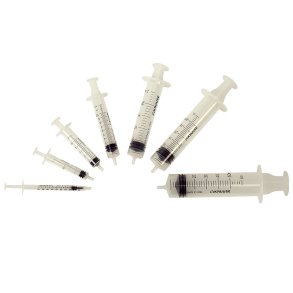
3-component disposable syringes, sterile
DRIFTONDisposable syringes with sliding plunger
1-60 ml with concentric or eccentric tips
With or without Luer lock
Sterile packaging
Price from EUR 9.90
(excl. VAT)Not in stock? Order anyway – we will order the item from our supplier as soon as we receive your order.
For laboratory applications involving the filtration or sterile filtration of small sample volumes, NEST syringe filters with a PES (polyethersulfone) membrane provide a practical solution. The hydrophilic PES membrane is characterised by low protein binding, making it particularly suitable for biological and aqueous solutions where minimising protein loss during filtration is important.
Using the filter is straightforward. Simply attach the syringe filter to the tip of a compatible disposable syringe and apply pressure to pass the sample through the membrane.
NEST PES syringe filters are suitable for laboratory workflows across a wide range of fields, including life science, biotechnology, the pharmaceutical industry, environmental applications, food and beverage, and agricultural laboratories. Within life science laboratories, they can be used for sterile filtration and preparation of small quantities of protein solutions, buffers, reagents, additives and pharmaceuticals.
The combination of a hydrophilic surface and low protein binding makes PES a suitable membrane material for many biological and aqueous samples. Its low protein-binding properties help reduce unwanted adsorption of proteins onto the membrane, thereby limiting protein loss throughout the filtration process.
The filter housing is made from medical-grade polypropylene (PP) and features a one-piece, injection-moulded construction. This robust design withstands high pressure while also helping to reduce the risk of leakage during filtration.
NEST PES syringe filters feature a pore size of 0.22 µm and are available in three different diameters: 13 mm, 25 mm and 30 mm.
The most suitable size depends, among other factors, on the volume of the sample being processed and the required filtration capacity. As the filter diameter increases, so does the available membrane area. Larger diameters are therefore well suited to applications involving greater sample volumes.
All variants are supplied sterile and individually packaged. The filters are intended for single use.
The most suitable membrane type depends on both the sample being filtered and the specific application. Below, you can compare the three membrane types available in the NEST range to help you select the appropriate option for your filtration needs.
| Membrane | Properties | Typical applications |
|---|---|---|
| PES | Hydrophilic membrane with minimal protein binding and efficient flow | Filtration of biological and aqueous solutions, as well as samples containing proteins, buffers or reagents |
| PVDF | Low protein binding and high resistance to chemical exposure | Protein-containing samples and biological solutions |
| Nylon | Hydrophilic and durable membrane with broad chemical compatibility | General sample filtration, as well as aqueous solutions and certain solvents |
| Material | Polypropylene |
Disposable syringes with sliding plunger
1-60 ml with concentric or eccentric tips
With or without Luer lock
Sterile packaging
Price from EUR 9.90
(excl. VAT)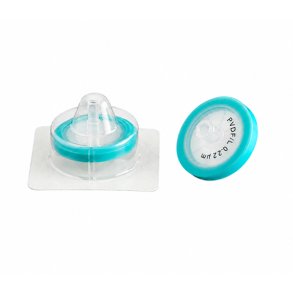
DAC-331001
Low protein binding
Good chemical resistance
0.22 µm pore size / 30 mm diameter / 100 pcs.
Sterile and individually packed
EUR 81.50
(excl. VAT)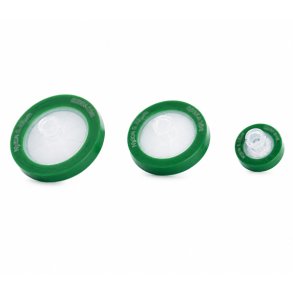
Hydrophilic nylon membrane
Broad chemical compatibility
Pore size: 0.45 µm
Diameter: 13, 25 or 30 mm
Sterile and individually packed
Price from EUR 47.00
(excl. VAT)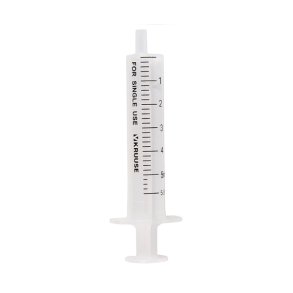
DAC-112381
Extended graduation for added capacity
Transparent polypropylene barrel
Luer slip connection
Sterile and individually packaged
EUR 9.50
(excl. VAT)


